
Narrowband UVB Phototherapy for Skin Health
Explore a medically guided light therapy option for psoriasis, vitiligo, and cutaneous lichen planus.
Targeted Light Therapy for Skin Health
Ready to Discuss Your Skin?
Schedule an evaluation to learn whether narrowband UVB may be appropriate for you.
How Narrowband UVB Phototherapy Works
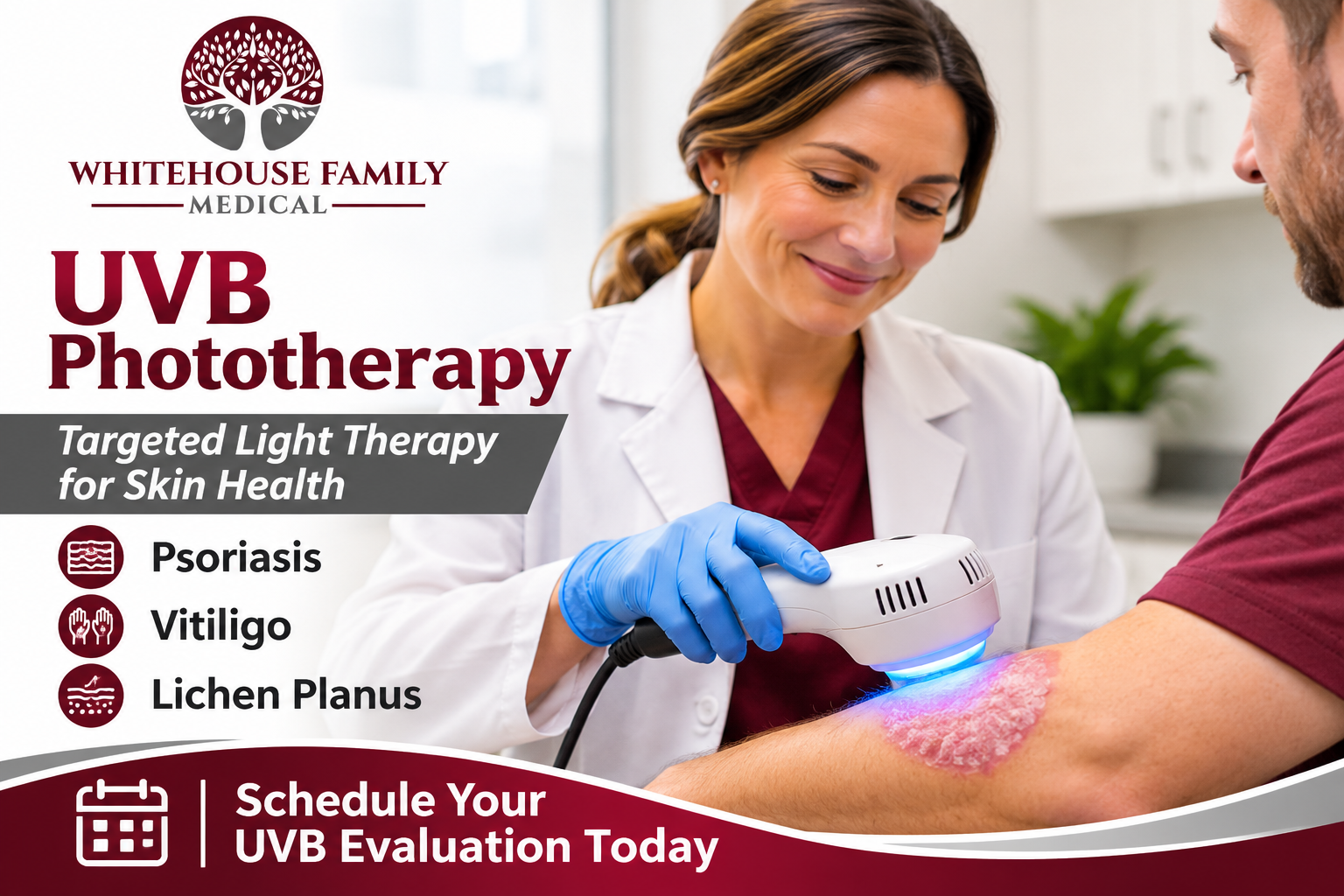
Narrowband UVB phototherapy uses a specific band of ultraviolet B light to treat affected skin under medical supervision. By delivering controlled exposure over a series of visits, it may help calm inflammation in psoriasis, encourage repigmentation in some people with vitiligo, and ease symptoms of cutaneous lichen planus. The treatment area, exposure time, and schedule depend on your skin and medical history.

Is This Treatment Right for Me?
A clinician can review your diagnosis, medications, skin sensitivity, and treatment goals to determine whether narrowband UVB is a suitable option. Light therapy is not appropriate for everyone, and results vary.
What Happens at an Evaluation?
Your medical professional can examine the affected areas, discuss previous treatments, and explain potential benefits, risks, and the expected visit schedule before you decide how to proceed.
Why Is Medical Guidance Important?
Careful dosing and follow-up help limit unnecessary UV exposure and allow your clinician to adjust treatment based on your skin’s response. Tell your care team about new medications or changes in your skin during the course of therapy.
Skin Conditions That May Benefit from Narrowband UVB
Narrowband UVB may be considered for several inflammatory or pigment-related skin conditions. A medical evaluation helps clarify your diagnosis and whether light therapy fits your care plan.
01
Psoriasis: May help reduce inflammation and scaling
02
Vitiligo: May encourage gradual repigmentation
03
Cutaneous Lichen Planus: May ease itchy skin lesions
04
Individualized Care: Treatment tailored to your skin
1
Medical Evaluation
2
First Treatment
3
Ongoing Sessions
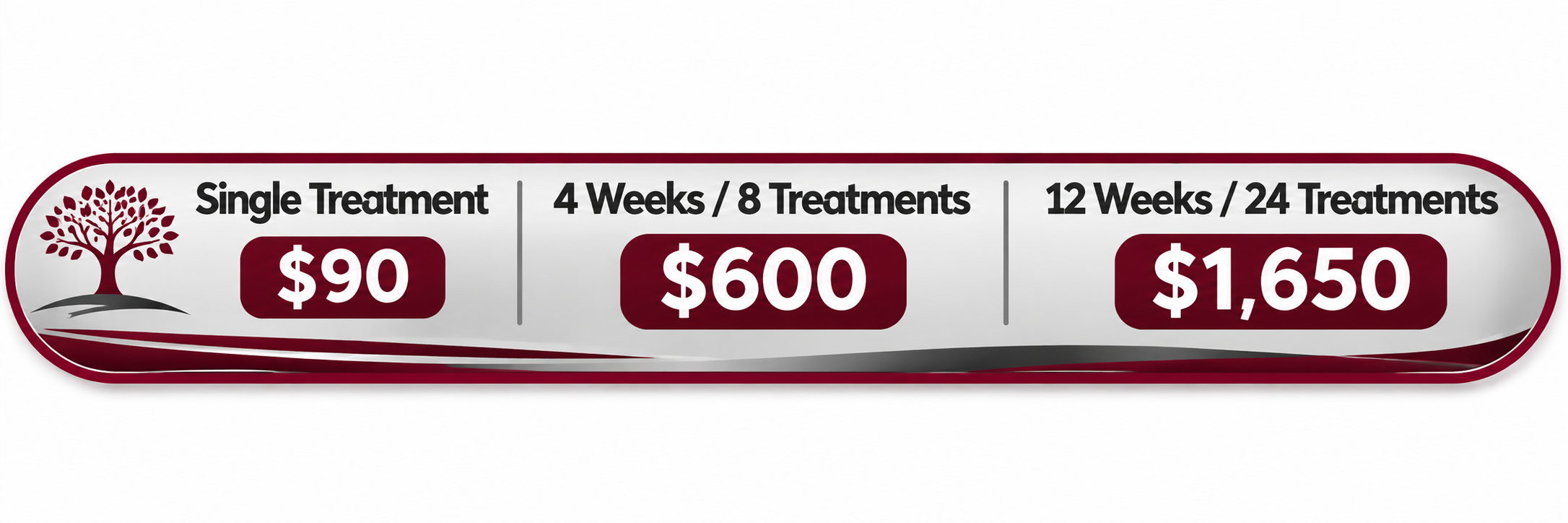
Narrowband UVB Treatment Options
Frequently Asked Questions About Narrowband UVB
Learn how treatment works, what visits involve, and why an individual clinical plan matters.
What is narrowband UVB phototherapy?
It uses a specific range of ultraviolet B light to treat certain skin conditions. Treatment is delivered in measured doses under clinical guidance.
Which skin conditions may be treated with narrowband UVB?
It may be considered for conditions such as psoriasis, vitiligo, and cutaneous lichen planus. A clinician can determine whether it is appropriate for your particular condition.
How do I know if UVB treatment is right for me?
A medical evaluation helps assess your diagnosis, skin history, medications, and other factors before treatment is recommended.
What happens at my first treatment?
Your care team will explain the process, review any necessary skin protection, and provide a brief exposure based on your clinical plan.
How long does a treatment session take?
Light exposure is usually brief, but the total visit may take longer for check-in, preparation, and care-team instructions. Timing varies by patient.
How often will I need sessions?
The frequency and total number of visits depend on your condition and response. Your clinician will recommend a schedule and adjust it as needed.
Are there possible side effects?
Temporary redness, dryness, itching, or tenderness can occur. Tell your care team about any unexpected or persistent reaction before your next session.
Will I need to protect my eyes or unaffected skin?
Protective measures may be recommended depending on the treatment area. Follow your care team’s instructions for eyewear, clothing, and skin coverage.
Can I change my treatment schedule on my own?
Do not change your exposure time or visit frequency without clinical guidance. Let your care team know about missed visits, medication changes, or new skin reactions.